- English
- Español
- Português
- русский
- Français
- 日本語
- Deutsch
- tiếng Việt
- Italiano
- Nederlands
- ภาษาไทย
- Polski
- 한국어
- Svenska
- magyar
- Malay
- বাংলা ভাষার
- Dansk
- Suomi
- हिन्दी
- Pilipino
- Türkçe
- Gaeilge
- العربية
- Indonesia
- Norsk
- تمل
- český
- ελληνικά
- український
- Javanese
- فارسی
- தமிழ்
- తెలుగు
- नेपाली
- Burmese
- български
- ລາວ
- Latine
- Қазақша
- Euskal
- Azərbaycan
- Slovenský jazyk
- Македонски
- Lietuvos
- Eesti Keel
- Română
- Slovenski
- मराठी
- Srpski језик

What are the most frequently asked questions about Lifangmei RFID systems in retail?
Lifangmei RFID SYSTEM FAQ
Q1: What is the actual read accuracy I can expect in a real-world retail environment?
A: In controlled testing environments, UHF RFID systems achieve read rates approaching 99.9%. Real-world retail performance depends heavily on installation quality and environmental factors. For fixed overhead infrastructure, expect sustained accuracy between 95% and 98% when the system is properly tuned .
The key variable is product composition. Items containing liquids or dense metals absorb RF energy, reducing read range. A well-designed installation accounts for these variables through strategic antenna placement and reader power adjustments. During commissioning, a site survey identifies interference sources—LED lighting ballasts, metal shelving, and adjacent RFID systems—allowing the technician to configure sensitivity thresholds accordingly.
For most apparel and general merchandise retailers, the combination of ceiling-mounted fixed readers and periodic handheld cycle counts delivers inventory accuracy exceeding 98%—a dramatic improvement over barcode-based systems that typically achieve 60–70% accuracy.
Q2: Can RFID tags be used for both inventory management and theft prevention simultaneously?
A: Yes, and this dual-purpose capability represents one of the strongest value propositions for RFID adoption. The same tag that enables cycle counting and supply chain visibility can function as an electronic article surveillance (EAS) device .
There are two implementation approaches:
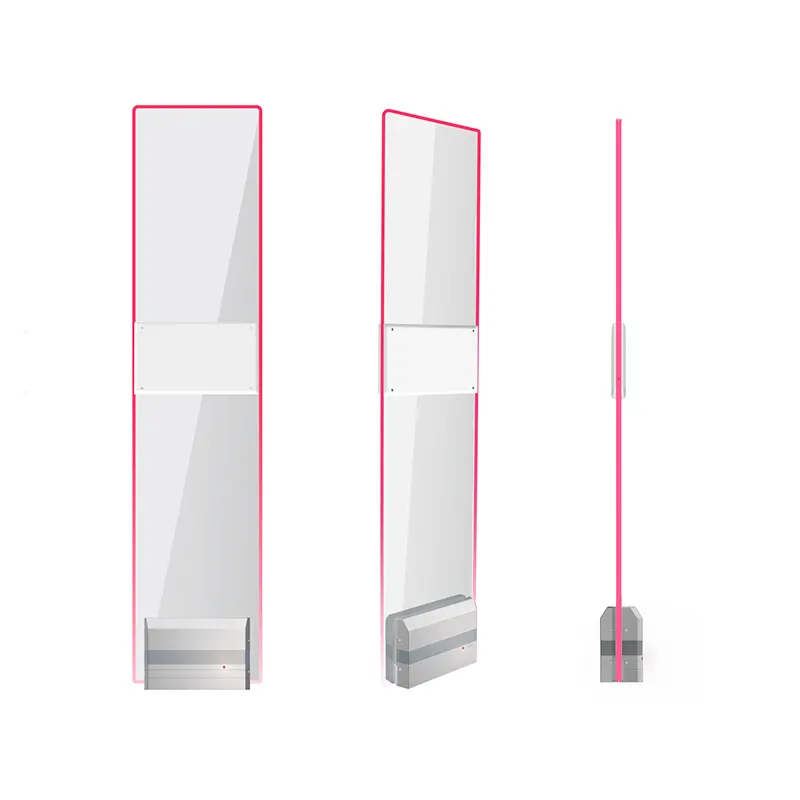
Dual-technology tags: These combine an RFID inlay with a traditional RF or AM EAS element. The RFID portion manages inventory data; the EAS element triggers alarm pedestals at store exits. Both functions operate independently on the same tag.
RFID-only exit detection: Fixed portal readers at store exits continuously monitor for moving tags. When a tagged item passes through the portal without being deactivated at the point of sale, the system triggers an audible and visual alarm. This approach requires no separate EAS hardware and provides the added benefit of logging exit events for loss prevention analysis.
For high-value merchandise, the RFID tag itself acts as a visible deterrent. Customers recognize that tagged items are tracked throughout the store, reducing opportunistic theft.
Q3: How does fixed overhead infrastructure differ from handheld scanning, and which is right for my store?
A: The choice between fixed infrastructure and handheld devices represents a trade-off between continuous visibility and implementation cost .
Handheld readers operate on a simple mental model: you walk through the store, point the device at shelves, and capture tags within a several-meter radius. A full store count takes 30 minutes to two hours depending on store size. Handhelds excel for periodic cycle counts, price verification, and locating specific items for omnichannel fulfillment. They require no permanent installation and can be deployed across multiple locations with minimal capital expenditure.
Fixed overhead infrastructure mounts readers in the ceiling or at strategic portals, reading continuously without human intervention. However, the mental model of “instant visibility” is misleading. Due to protocol limitations, a fixed system requires several minutes to complete a full inventory cycle. Multiple readers must operate sequentially to avoid interference, and some tags may require multiple sightings before they register .
The right choice depends on your operational needs:
Handheld-only: Best for small stores, seasonal pop-ups, or operations where daily full-store counts are unnecessary.
Fixed infrastructure: Ideal for high-volume stores, omnichannel fulfillment centers, or locations where real-time out-of-stock alerts justify the higher installation cost.
Hybrid approach: Most retailers deploy fixed portals at receiving doors and exits, paired with handhelds for floor-level cycle counts—balancing cost with continuous visibility at critical control points.