- English
- Español
- Português
- русский
- Français
- 日本語
- Deutsch
- tiếng Việt
- Italiano
- Nederlands
- ภาษาไทย
- Polski
- 한국어
- Svenska
- magyar
- Malay
- বাংলা ভাষার
- Dansk
- Suomi
- हिन्दी
- Pilipino
- Türkçe
- Gaeilge
- العربية
- Indonesia
- Norsk
- تمل
- český
- ελληνικά
- український
- Javanese
- فارسی
- தமிழ்
- తెలుగు
- नेपाली
- Burmese
- български
- ລາວ
- Latine
- Қазақша
- Euskal
- Azərbaycan
- Slovenský jazyk
- Македонски
- Lietuvos
- Eesti Keel
- Română
- Slovenski
- मराठी
- Srpski језик

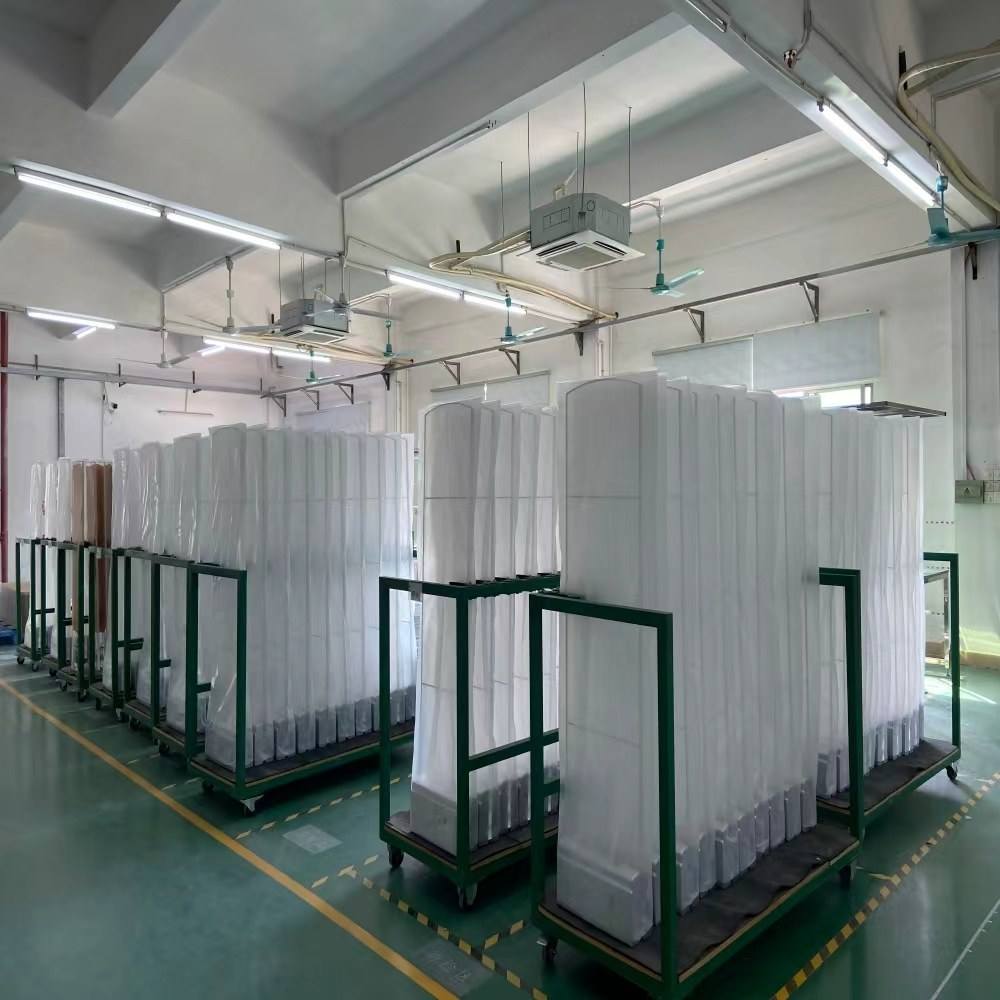
I stood beside the 1300-ton injection molding machine for the whole afternoon, and I finally understood why the EAS antenna housing wouldn't deform.
Last week, I accompanied a client to inspect the production line. I spent over an hour standing in the injection molding workshop. The client asked a question: "How do you ensure that the size of each batch of antennas is the same?"
The answer is not in the PPT in the office, but on that 1300-ton injection molding machine.
What is the biggest problem for plastic parts? Shrinkage.
The antenna housing is made through injection molding. Plastic pellets are heated and melted, injected into the mold, and then cooled to form. It sounds simple, but size deviations are the norm - different material batches, temperature fluctuations, incorrect holding time, and the resulting product will differ by just a few millimeters.
The EAS antenna is used in pairs. The two sides have different sizes, and if the synchronization signal is not aligned properly, the detection range will be reduced.
Why was it possible to control it?
The mold for Force Fangmei Technology was produced in-house, not outsourced. The advantage of having an in-house mold is that you know where it is prone to deviation and how to adjust. With a locking force of 1300 tons, the material is filled fully and pressed tightly. We have tested producing hundreds of pieces continuously, measuring the key dimensions with calipers, and the fluctuation range was controlled within an acceptable range.
The customer stood beside the machine and watched for forty minutes, viewing from the first item to the dozens of items. He said, "When I went to another supplier before, every time they delivered the goods, we had to pick out those with much larger size differences. This batch from you feels much better."
Did the customer place an order later?
That customer is a distributor from South America. They placed the first batch of trial orders last month. He said he didn't look at the testing distances shown in the catalogues. Instead, he checked if there were calipers on the production line.
Our factory does have calipers.
Regarding Lifangmei Technology
Li Fangmei Technology was established in 2006. Its headquarters is located in Dongguan. It possesses its own independently developed AM motherboard technology (AM100/AM100E), has obtained ISO 14001:2015 certification, and has been recognized as a national high-tech enterprise. Its products include AM/RF antennas, anti-theft tags, demagnetizers, lock-picking tools, passenger flow counters, entrance gates, etc., and are exported to 40 countries and regions around the world.
Product Inquiry: sales@lifmei.com | Official Website: www.lifmei-eas.com